
January 2026 Cotton Rates in Maharashtra: Latest Market Update, Prices & Farmer Outlook
Introduction
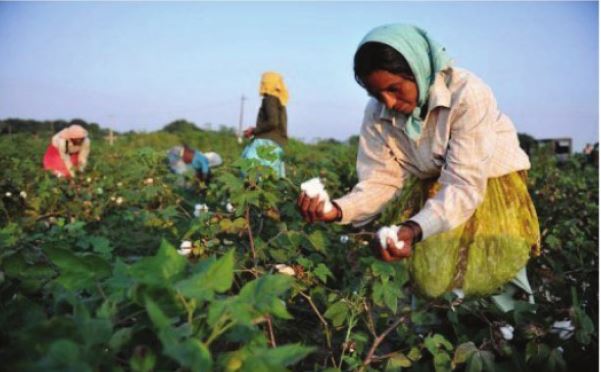
Cotton is one of the most important commercial crops in Maharashtra, playing a crucial role in the livelihood of millions of farmers and supporting India’s textile industry. As we step into January 2026, cotton prices across major agricultural markets (mandis) in Maharashtra show moderate stability with slight regional variations.
This blog provides a detailed January 2026 cotton rate update in Maharashtra, covering mandi prices, reasons behind price trends, farmer impact, government support, and the future outlook for the cotton market in 2026.
Cotton Rates in Maharashtra – January 2026 (Latest Update)
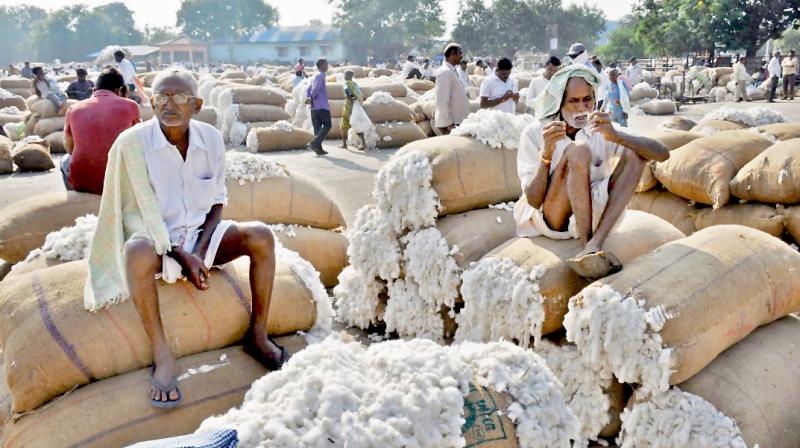
During January 2026, cotton prices in Maharashtra have largely remained between ₹7,000 and ₹8,100 per quintal, depending on quality, staple length, and market demand.
Major Cotton Mandi Prices (Approx.)
- Beed district: ₹7,800 – ₹8,060 per quintal
- Yavatmal district: ₹7,000 – ₹7,200 per quintal
- Wardha district: ₹7,050 – ₹7,100 per quintal
- Akola & Amravati region: ₹7,400 – ₹7,900 per quintal
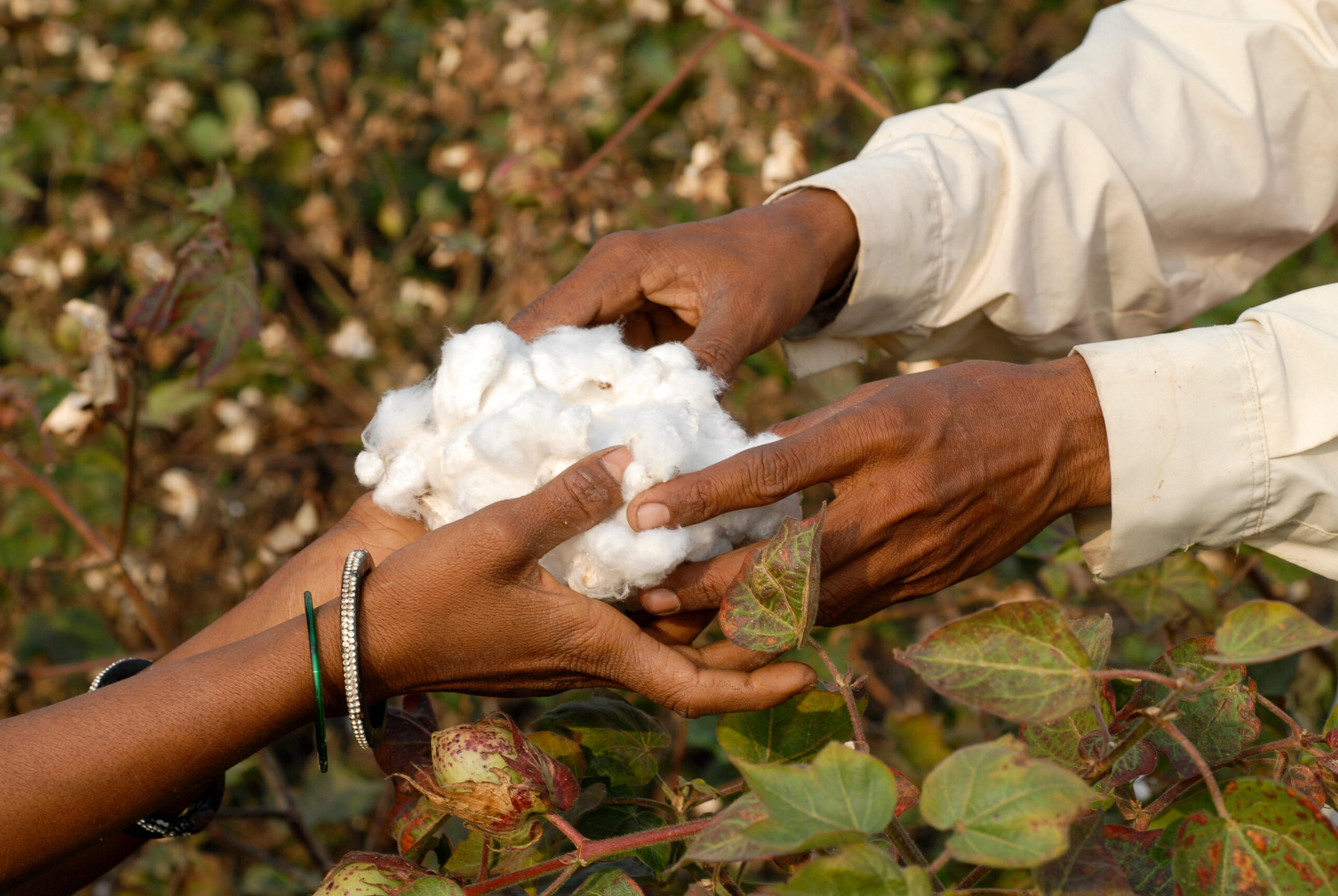
Premium quality cotton with better fiber length continues to attract higher prices, while average-quality cotton trades closer to the lower end of the range.
Why Cotton Prices Are Stable in January 2026
Several factors are influencing cotton prices in Maharashtra this season:
1. Adequate Cotton Supply
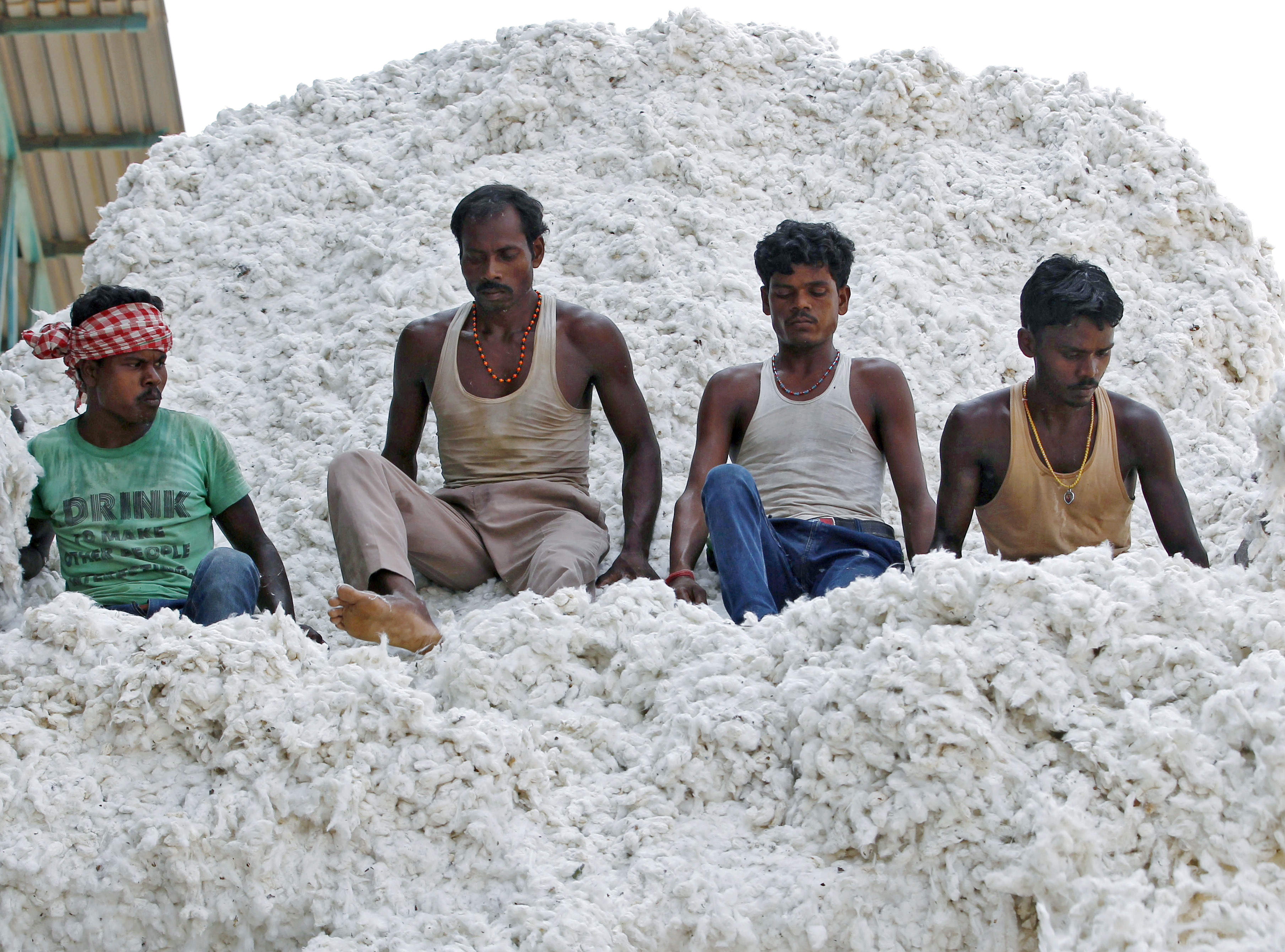
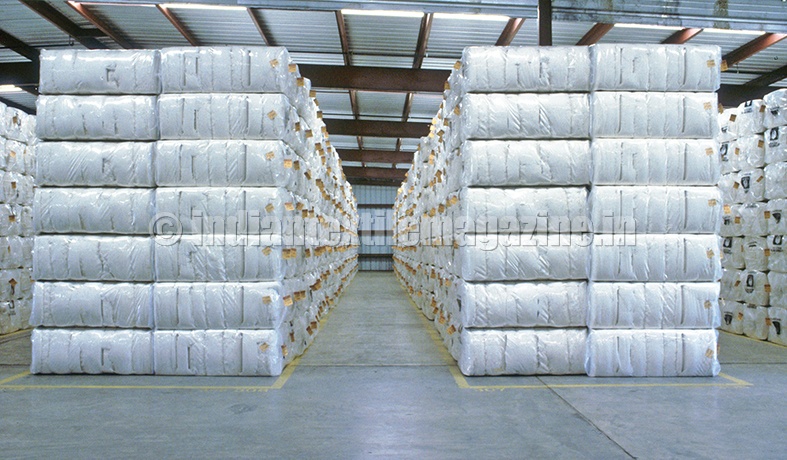
The 2025–26 cotton season has produced a comfortable supply, preventing sharp price increases. Good arrivals in mandis have kept prices under control.
2. Moderate Demand from Textile Mills
Domestic textile demand has been steady but not aggressive. Mills are purchasing cautiously due to global market uncertainty and inventory management.
3. Cotton Imports
Cotton imports towards the end of 2025 increased overall availability in the Indian market, indirectly affecting domestic cotton prices.
4. MSP Procurement Support
The Cotton Corporation of India (CCI) continues procurement at Minimum Support Price (MSP), providing a safety net to farmers whenever open market prices weaken.
Impact of January 2026 Cotton Prices on Farmers
Income Stability with Challenges
Prices around ₹7,000–₹8,000 per quintal offer moderate income, but rising costs of:
- Seeds
- Fertilizers
- Pesticides
- Labor
are reducing overall profit margins for farmers.
Dependence on MSP
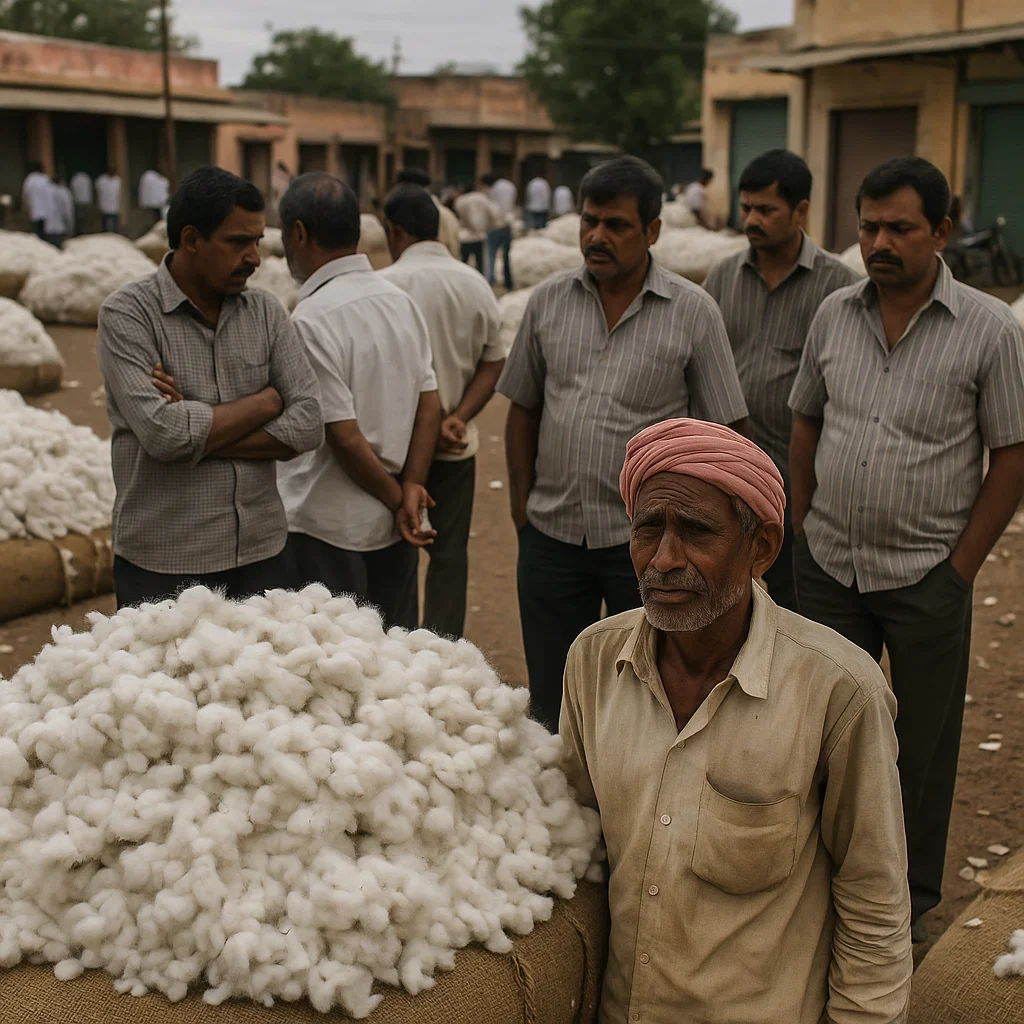
In many regions of Maharashtra, farmers rely heavily on MSP procurement to secure fair returns, especially when private traders quote lower prices.
Crop Shifts Emerging
Due to uncertain profits and labor-intensive cultivation, some farmers are gradually shifting from cotton to soybean, tur, and other crops.
Weather & Production Challenges
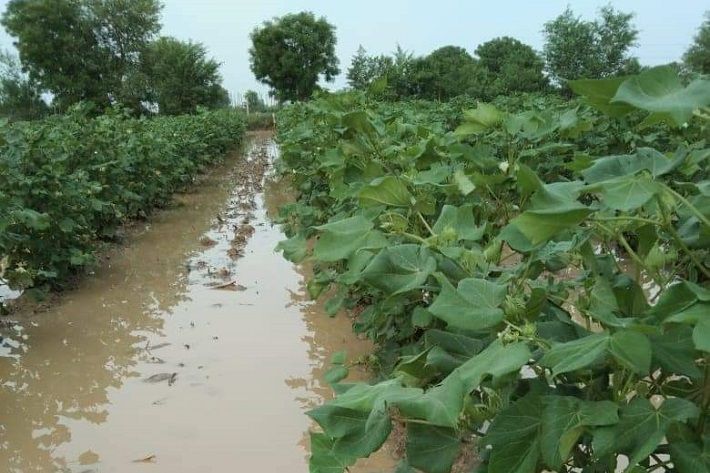
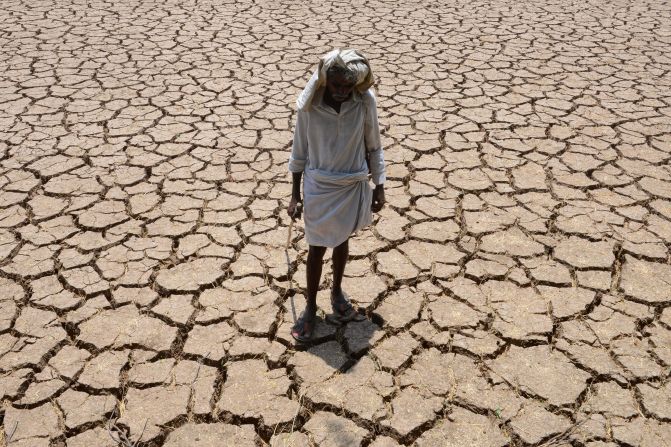
Weather remains a critical risk factor for cotton farmers:
- Uneven rainfall patterns
- Pest attacks such as pink bollworm
- Occasional floods and droughts
These challenges affect yield quality and influence price realization in the market.
Effect on Textile Industry and Trade
Benefits for Textile Mills
Moderate cotton prices help textile mills control raw material costs, improving competitiveness in domestic and export markets.
Export Market Influence
Global cotton prices, trade policies, and demand from countries like Bangladesh and Vietnam continue to influence Indian cotton trade indirectly.
Cotton Price Outlook for Maharashtra in 2026
Short-Term Outlook
- Prices likely to remain range-bound in the first half of 2026
- MSP will continue to act as a price support mechanism
Long-Term Outlook
- Any reduction in cotton acreage may push prices upward
- Increased export demand could strengthen cotton rates
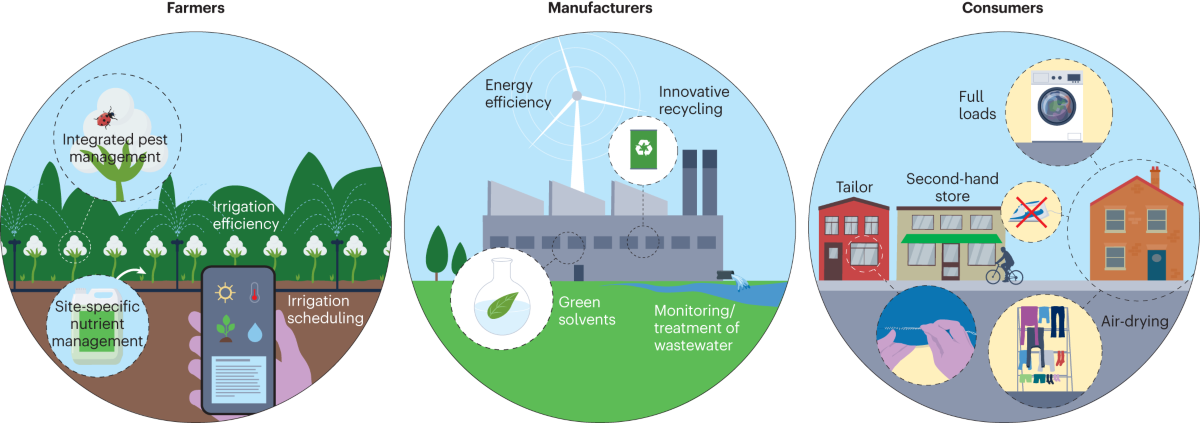
- Climate-resilient farming practices will be crucial
Overall, cotton prices in Maharashtra during 2026 are expected to remain stable with limited upside, unless major supply disruptions occur.
Key Takeaways: January 2026 Cotton Market Update
- Cotton prices in Maharashtra range between ₹7,000–₹8,100 per quintal
- Prices are stable due to adequate supply and moderate demand
- MSP procurement continues to support farmers
- Rising cultivation costs remain a concern
- Future prices depend on global demand, acreage, and weather conditions
Conclusion
The January 2026 cotton rate update in Maharashtra reflects a market that is stable but cautious. While farmers are receiving reasonable prices, increasing input costs and climate risks continue to challenge profitability. For sustainable growth, a balanced approach involving policy support, improved farming techniques, and strong market linkages will be essential.
Cotton will remain a backbone of Maharashtra’s agricultural economy in 2026, but informed decision-making will be the key for farmers and traders alike.