

🌾 Crop Price Rates Update 2026: What Farmers, Traders & Consumers Need to Know
Agriculture remains the backbone of India’s rural economy and global food systems. As we step into 2026, crop price movements — both domestic and global — are shaping farmers’ incomes and market dynamics like never before. This year’s crop price updates reflect policy changes, production trends, weather impacts, supply-demand shifts, and international market pressures — all converging to determine how much farmers earn and how much consumers pay at retail counters.
Let’s unpack the most recent developments and what they mean for agriculture stakeholders in 2026.
📈 1. Government Sets New Minimum Support Prices (MSP) for 2026–27
One of the most significant policy updates for crop prices in 2026 is the revision of MSPs by the Government of India. MSP is the floor price at which the government buys crops from farmers to safeguard them against steep price falls.
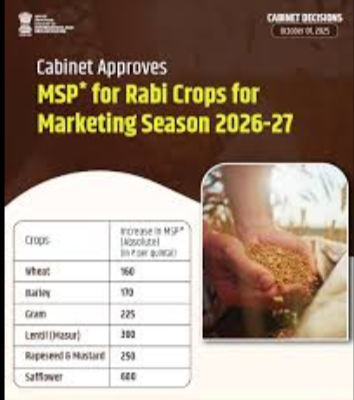
The Cabinet Committee on Economic Affairs (CCEA) has approved MSP increases for major rabi crops for the 2026–27 marketing season, aiming to ensure remunerative returns and support farm incomes. (Press Information Bureau)
🌾 Key MSP updates for major crops
| Crop | MSP for 2026–27 (₹/quintal) | Key Changes |
|---|---|---|
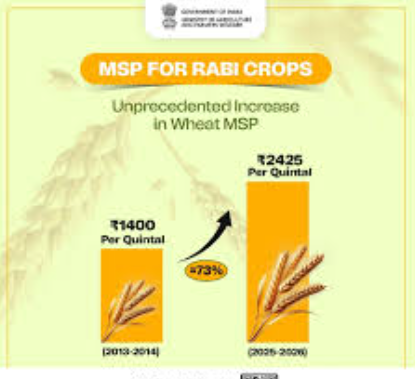
| Wheat | ₹2,585 | Up from ₹2,425 (+₹160) |
| Barley | ₹2,150 | Up from ₹1,980 (+₹170) |
| Gram | ₹5,875 | Up from ₹5,650 (+₹225) |
| Lentil (Masur) | ₹7,000 | Up from ₹6,700 (+₹300) |
| Rapeseed & Mustard | ₹6,200 | Up from ₹5,950 (+₹250) |
| Safflower | ₹6,540 | Up from ₹5,940 (+₹600) |
This MSP hike reflects the government’s commitment to support farm earnings and ensure MSPs are at least 1.5 times the cost of production — a threshold set under Union Budget assurances.
💡 Why it matters: Higher MSPs mean farmers have a stronger safety net — reducing distress sales. However, whether procurement at these MSP levels actually happens depends on efficient implementation at the state level.
🌾 Crop Price Rates Update 2026: What Farmers, Traders & Consumers Need to Know
📊 2. Market Realities: Farmgate vs Retail Prices
While MSP provides a safety net, local markets tell a more complex story. In many regions, actual selling prices (farmgate rates) can differ significantly from MSP.
📉 Cases of Farmer Distress
- Red gram farmers in Andhra Pradesh are reportedly selling below MSP (₹6,500–₹6,600) due to delayed procurement and storage issues — forcing them into distress sales. (The Times of India)
Such price slippages disrupt expected earnings, especially for small farmers without access to structured markets.
📈 Retail Side Price Surges
At the same time, other crops are witnessing higher retail prices:
- Rice prices have risen significantly in southern Karnataka, increasing by roughly 10% in wholesale markets, while paddy (rice at farm level) is selling below or near MSP — indicating a disconnect between farm and consumer markets. (The Times of India)
- Tomato prices in some markets have shot up by about 150% due to weather impacts, tight supply and strong demand from neighboring states, thereby benefiting farmers but harming consumers. (The Times of India)
These mismatches highlight supply chain inefficiencies where farmers often don’t capture the full retail value of their produce.
🌍 3. Global Price Outlook for Agricultural Commodities
India does not operate in isolation — global crop price trends also influence domestic markets.
According to recent forecasts and commodity reports:
📉 Softening Grain Prices
- World Bank and trade outlooks suggest that global grain prices — especially major staples like wheat and maize — have been under pressure from abundant supply, leading to subdued price levels.
📊 Agriculture Sector Outlook
- Global agricultural outlook reports note uneven conditions for 2026, with certain crops stabilizing while others face supply shifts. For example, soybeans and corn may experience price variability due to weather and supply changes
- 🌾 Crop Price Rates Update 2026: What Farmers, Traders & Consumers Need to Know
🧑🏫 Steady Price Expectations
- Some agricultural economists forecast low and steady commodity prices in 2026 for key crops — a sign that markets may continue to absorb post-pandemic supply and demand shocks.
Implication: While domestic MSPs are rising to protect farmers, global prices might remain moderate — reducing pressure on food inflation but also tightening export opportunities for some crops.
🌦️ 4. Weather and Crop Conditions Affect Price Movements
Unpredictable weather patterns continue to play a crucial role in agricultural pricing:
- Excessive rains, cooler spells and virus attacks, as seen in certain tomato crops, can decimate yields and push up market prices.
- Erratic monsoons and drought conditions impact pulses and oilseeds, leading to production shortfalls and price volatility.
Climate change pressures and localized weather episodes are increasingly key determinants for price spikes, supply shortages, and farmer income fluctuations.
🌾 Crop Price Rates Update 2026: What Farmers, Traders & Consumers Need to Know
📌 5. What This Means for Different Stakeholders
👨🌾 For Farmers
- Positive: Higher MSPs provide a stronger financial floor and increase potential returns for core rabi crops.
- Challenge: Not all farmers benefit equally if procurement systems — especially for pulses and alternative crops — are weak or delayed.
- Risk: Localized distress selling continues where market access is limited.
🛒 For Traders & Markets
- Commodity traders and wholesalers must balance between MSP-linked storage prices and volatile retail demands influenced by climate and global market changes.
🧑🍳 For Consumers
- Rising retail prices of select staples (like rice and vegetables) show that consumer inflation can diverge from MSP dynamics.
- Food price stability depends on supply chain efficiency, buffer stocks, and transportation logistics.
📈 For Policymakers
- Ensuring better procurement infrastructure.
- Strengthening cold storage and APMC reforms.
- Streamlining exports under balanced policy to tap global demand without hurting local supplies.
🧠 6. The Way Forward
Crop prices in 2026 are deeply influenced by a mix of policy decisions, market forces, supply chain inefficiencies, and global trends. For Indian agriculture, the MSP approach remains central to protecting farmers’ incomes, but it must be paired with better market access, transparent pricing information, and modern supply chains to ensure fair returns.
Greater investments in storage, quality grading, and farmer training will be essential to narrow the gap between farmgate and retail prices — benefiting both producers and consumers.
At the global level, price forecasts suggest relative stability, but agricultural markets are still vulnerable to weather risks and trade policy shifts, which means stakeholders should stay prepared for short-term price fluctuations.
📌 Conclusion
Crop price rates in 2026 show a complex yet evolving picture — one where government support via MSP increases, market realities reflect local disparities, and global trends temper price volatility. Farmers stand to benefit from higher MSPs, but turning that support into real income gains will require improvements in procurement systems and market infrastructure.
Consumers need stable food supplies, which means bridging the farm-to-fork price gap. As we move further into the decade, smart policymaking, resilient supply chains, and farmer empowerment will be the keys to a sustainable and profitable agricultural economy.